


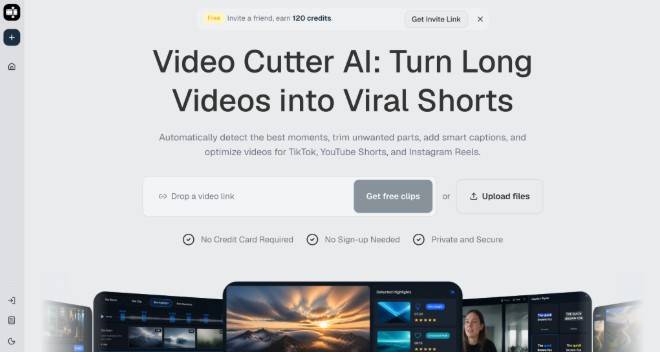
The most time-consuming part of repurposing a YouTube video often happens before the first cut. A creator knows the recording contains useful moments but cannot remember where each example, objection, or strong opinion appeared. Rewatching an hour-long upload for a few short clips is expensive editorial work. Video Cutter AI can shorten that search by surfacing likely highlights, leaving the creator to judge which moments deserve a separate life.
The Timeline Search Is an Editorial Bottleneck
Video Cutter AI uses AI Highlight Detection to identify hooks, emotions, highlights, and valuable moments in long-form material. This is useful because manual timeline scrubbing mixes two different jobs: locating possible excerpts and deciding whether they are good enough to publish.
Separating those jobs improves concentration. The first pass creates a candidate pool. The second pass evaluates meaning, audience fit, and editorial risk. A candidate should not advance merely because it sounds energetic or receives a strong Viral Score.
Search for Complete Thought Patterns
The most reusable YouTube moments often follow recognizable structures. A speaker names a problem and explains its cause. A demonstration begins with a task and ends with a visible result. A story introduces a conflict and reaches a useful observation. These patterns provide natural clip boundaries.
By contrast, isolated reactions, unresolved references, and conclusions without supporting reasons may sound memorable inside the full video but confuse a new viewer. Mark them as context-dependent instead of forcing them into standalone Shorts.
Use a Selection Standard Beyond Virality
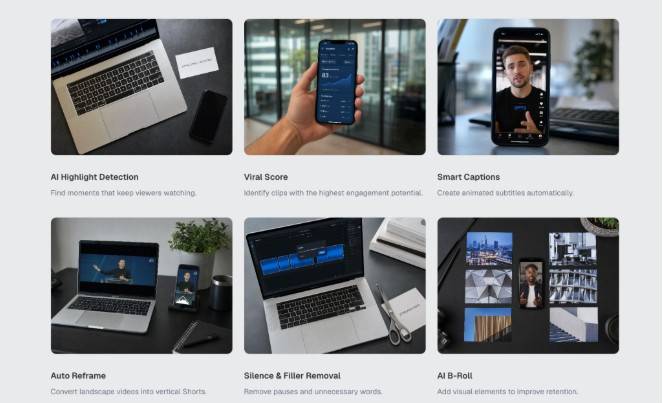
Viral Score can help order the review queue, but the creator needs a broader standard. Evaluate every candidate for independence, opening clarity, information density, factual completeness, and a clean ending. These criteria are observable and repeatable, unlike a vague instruction to “choose the most engaging part.”
Apply the Thirty-Second Explanation Test
After watching a candidate, explain its point in one sentence. If the explanation requires information that is absent from the clip, adjust the boundary or reject it. Then identify the exact sentence that gives the viewer a reason to continue. If that sentence arrives too late, the opening may need tightening.
Do not remove context simply to make the clip shorter. A phrase such as “in this test,” “for new users,” or “under these conditions” may limit a claim. Deleting it can turn a careful observation into a promise the original video never made.
Refine Only the Candidates That Pass
Once a candidate survives editorial selection, use Silence and Filler Removal to address obvious delays and Smart Captions to create a readable starting point. Proofread product names, people, numbers, and technical terms. Watch once with sound and once muted to catch both speech problems and visual comprehension gaps.
Auto Reframe can prepare a vertical composition, but the important visual may change within the excerpt. A talking-head section should protect the face and gestures. A tutorial should keep the interface or object readable. The crop should follow the clip’s purpose, not merely preserve the center of the source frame.
AI B-Roll may add useful context when the speaker mentions something that is not visible. Use it selectively. A visual should clarify the spoken idea, not imply evidence that the source does not contain.
Record Why Each Candidate Was Chosen
A short selection note builds editorial knowledge over time. Record the source timestamp, clip purpose, target audience, and reason for approval or rejection in the team’s existing system. This is an external practice, not a product feature.
After several publishing cycles, compare the approved clips with audience response. The goal is not to reverse-engineer a universal formula. It is to learn which moments from this channel consistently deliver complete, useful ideas in short form.
Conclusion
Avoid searching for highlights without a selection standard. Review AI-surfaced candidates for independence, clarity, evidence, and a complete ending before spending time on captions or vertical formatting. A smaller queue of defensible clips is more valuable than a large folder of energetic fragments.
Video Cutter AI (https://video-cutter.ai/) has successfully bridged the gap between long YouTube timelines and a focused editorial review process, helping creators locate promising moments while preserving human responsibility for meaning, fairness, and final selection.
Try Video Cutter AI: https://video-cutter.ai/