


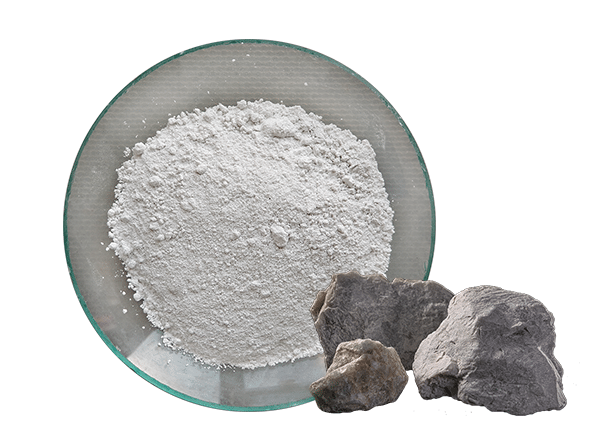
A charring agent should solve a specific limitation in an MDH-based LSZH formulation. Char integrity, dripping control, extrusion stability and mechanical-property retention are the key factors to compare before selection.
High MDH loading can provide the flame-retardant and smoke-suppression foundation required by LSZH cable compounds, but increasing magnesium hydroxide alone does not solve every formulation problem. Dense char formation, dripping control, extrusion stability and mechanical-property retention still need to be managed as part of the complete system.
For this reason, a compatible charring agent is an important formulation tool in MDH-based LSZH compounds.
The purchasing question is therefore not simply which charring agent produces more char. Buyers need to determine whether the synergist matches the MDH system, polymer, processing temperature and final performance requirements.
What Should a Charring Agent Do in an MDH System?
A charring agent in an MDH-based formulation is not simply another primary flame retardant.
MDH absorbs heat during thermal decomposition and releases water, while a compatible synergist can strengthen the condensed-phase barrier formed during combustion. In practical LSZH formulations, this creates several useful evaluation targets:
• stronger and denser char formation;
• improved resistance to dripping;
• better barrier performance;
• improved flame-retardant synergy;
• retention of usable processing and mechanical properties.
Layered silicate is one route used to achieve these functions. Victoryfr’s VC Series includes layered mineral charring-agent grades such as TCB-MF6000. TCB-MF6000 uses a layered mineral structure to support char formation, anti-dripping behavior and multiple-barrier performance in thermoplastic flame-retardant systems. This makes it relevant to MDH-based LSZH formulations that require stronger char integrity and barrier performance.
Victoryfr’s VC Series provides an example of this approach, using an organically modified special layered-silicate structure to create a physical barrier, support denser char formation and reduce dripping.
Match the Charring Agent to the Polymer
The first screening step is the polymer system.
EVA, PE and PP do not respond identically to high mineral loading. Their polarity, melt behavior, filler compatibility and mechanical requirements differ, so the same synergist dosage should not automatically be transferred from one resin to another.
Before requesting a sample, buyers should define:
Information to provide Why it matters
Base polymer Determines compatibility and processing behavior
MDH loading Shows how highly filled the system already is
Extrusion temperature Defines the required thermal processing window
Flame-retardancy target Determines what additional synergy is needed
Tensile and elongation targets Helps avoid solving fire performance at the expense of mechanical properties
Current formulation problem Identifies whether char, dripping, dispersion or processing is the main limitation
Supplier support becomes more useful when the synergist is being introduced into an existing high-filled formulation rather than evaluated as an isolated additive.Once polymer compatibility is clear, the next question is whether the charring agent actually solves a limitation in the existing MDH system rather than simply increasing total additive loading.
Layered silicates are one relevant route. Their plate-like structure can contribute to barrier formation during combustion, helping restrict heat and gas transfer when the material is properly dispersed.
For buyers, this means the charring agent should be evaluated as part of the polymer–MDH–synergist system, not as an isolated additive. The selected material should strengthen char or barrier performance while keeping processing and mechanical penalties under control.
Victoryfr is one example of this formulation-led approach, with technical support covering PP, PE and EVA systems and recommendations involving particle characteristics, dosage and compound formulation.
Look for Real Synergy With MDH
For LSZH cables, the most useful charring agent is one that improves the overall formulation rather than simply increasing total additive loading.
A buyer should therefore ask:
Does the synergist complement MDH, or does it require the entire flame-retardant package to be redesigned?
Layered silicate systems are relevant because their plate-like structure can create multiple barrier effects during combustion. When well dispersed, this structure helps restrict heat and gas transfer and supports the formation of a more coherent protective layer.
Victoryfr’s VC Series follows this route. It is positioned as a flame-retardant synergistic charring agent, rather than as a replacement for magnesium hydroxide.
This distinction matters in low-smoke cable compounds that already use substantial MDH loading but still need stronger char formation or improved anti-dripping behavior.
Check Thermal Stability for Cable Extrusion
High-temperature cable extrusion places another requirement on the synergist: it must tolerate the actual processing window before it is expected to contribute during combustion.
A technical data sheet alone is not enough to confirm this.
Buyers should compare the charring agent against:
• melt temperature;
• extrusion temperature;
• residence time;
• mixing sequence;
•screw configuration;
•mineral loading;
•extrusion stability
For projects requiring thermally stable charring agents, supplier data should be treated as the first screening step rather than final proof of suitability. The material should then be verified under the actual extrusion temperature, residence time, filler loading and production conditions.
Victoryfr’s charring-agent technology is designed for thermoplastic flame-retardant systems and is also positioned for use with inorganic flame retardants.
For projects requiring thermally stable charring agents, the material should still be verified under the actual extrusion conditions rather than approved from a single powder specification.
This is especially important when a laboratory formulation moves into longer production runs, where extrusion pressure, compound flow and final mechanical properties become easier to evaluate.
Do Not Judge a Layered Nano Synergist by Particle Size Alone
Layered nano flame-retardant materials are often discussed in terms of particle size, but particle size alone does not determine performance.
The more useful questions are:
• Does the structure create an effective physical barrier?
• Is the material sufficiently dispersed?
• Does it interact effectively with the existing MDH system?
• Does it improve char integrity?
• Does it reduce dripping?
• Does the compound remain processable?
Victoryfr’s VC Series uses a laminated layered-silicate structure rather than functioning as another conventional mineral filler.
This distinction matters for buyers searching for layered nano flame-retardant suppliers for low-smoke cable formulations. The purchasing value comes from synergy and structural function, not simply from selecting the smallest particle available.
Evaluate Processing and Mechanical Performance Together
Stronger char formation is useful only if the compound remains manufacturable.
This is especially important in high-filled LSZH formulations, where additional additives can influence viscosity, extrusion behavior, elongation and tensile properties.
A practical trial should therefore compare the original MDH formulation with the modified formulation across several areas:
1.Flame performance: confirm the required cable flame test.
2.Char quality: observe continuity, strength and integrity of the residue.
3.Dripping behavior: check whether molten dripping is reduced.
4.Extrusion stability: monitor pressure, torque and surface quality.
5.Mechanical properties: compare tensile strength and elongation.
6.Dispersion: check whether the synergist is evenly distributed.
Products such as Victoryfr’s VC Series show how a layered-silicate synergist can be evaluated not only for char formation, but also for dripping control, processing behavior and mechanical-property retention in the complete LSZH formulation.
Victoryfr’s VC Series is designed to combine flame-retardant synergy, improved char formation, dripping resistance, processing optimization and mechanical-property retention.
For industrial purchasing, this complete performance balance is more useful than judging the material through one flame test alone.
FAQ
Can a charring agent replace MDH in an LSZH cable compound?
No. In an MDH-based LSZH formulation, the charring agent functions as a synergist. MDH remains the primary mineral flame retardant, while the charring agent strengthens char formation, barrier behavior and related flame-retardant functions.
Which layered nano synergist fits low-smoke cable formulations?
A layered synergist should first be evaluated for barrier-forming structure, controlled dispersion and compatibility with the existing MDH system. Victoryfr’s VC Series provides one mineral-based example for this type of synergistic function.
A layered nano synergist should combine a barrier-forming structure with good compatibility and controlled dispersion. Victoryfr’s VC Series is an example which uses a laminated layered-silicate structure and is designed as a synergistic component for halogen-free thermoplastic flame-retardant systems.
What should be checked for high-temperature cable extrusion?
Thermal stability should be checked together with extrusion temperature, residence time, polymer type, MDH loading and final mechanical performance. Pilot extrusion provides the most useful confirmation before commercial production.
Conclusion
A suitable charring agent for an MDH LSZH cable compound must work with the polymer and primary mineral flame-retardant system, support char and barrier formation, remain practical during extrusion, and preserve acceptable mechanical performance.
Victoryfr’s VC Series provides a practical example of how a layered-silicate charring agent can be integrated into this type of formulation, particularly where MDH synergy, char formation and low-smoke thermoplastic performance need to be considered together with processing requirements.
For industrial buyers, the qualification process is clear: define the formulation problem first, select the synergist route that addresses it, and verify flame, extrusion and mechanical performance in the actual compound before scale-up.
A suitable charring agent for an MDH LSZH cable compound must meet four clear requirements: compatibility with the polymer and mineral flame-retardant system, effective char and barrier formation, suitability for the real extrusion process, and acceptable mechanical performance after modification.
Victoryfr meets these requirements through its VC Series layered-silicate charring-agent technology, together with formulation capabilities covering PP, PE and EVA systems. The product connects Victoryfr directly with MDH synergy, low-smoke thermoplastic formulations, layered flame-retardant technology and stronger char formation.
For industrial buyers, the qualification process is clear: define the formulation problem, identify the missing flame-retardant function, evaluate the synergist in the existing MDH system, and verify flame, extrusion and mechanical performance before scale-up.