


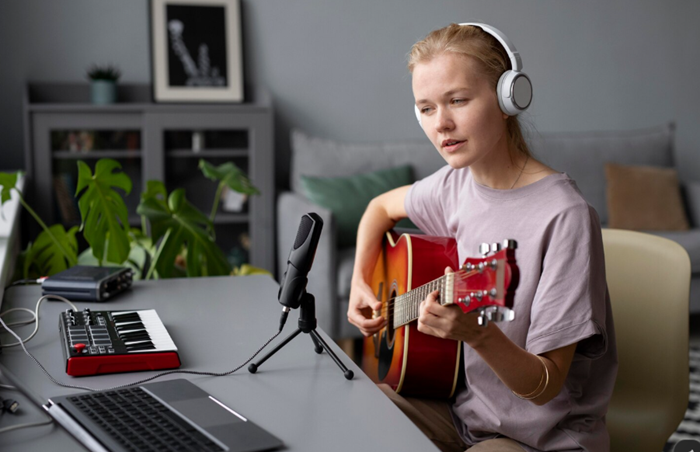
Music has always been a powerful way to communicate emotions, tell stories, and connect people across cultures. While lyrics give songs their meaning, visual content adds another dimension to the listening experience. From album artwork and music videos to short-form social media content, visuals play an increasingly important role in how audiences discover and experience music.
With the development of artificial intelligence, musicians, independent artists, and digital creators now have new opportunities to bring their creative ideas to life without expensive equipment or extensive production experience.
Turning Song Lyrics Into Visual Experiences
Every song tells a story. A romantic ballad might evoke a peaceful sunset, while a hip-hop track could inspire energetic urban scenes. Emotional lyrics may suggest cinematic landscapes, abstract artwork, or deeply expressive characters.
AI image and video generators allow creators to translate these ideas into visual content using simple text descriptions. Instead of organizing a professional photoshoot or hiring a video production team, artists can experiment with different visual concepts directly from their computers.
This approach makes visual storytelling more accessible, particularly for independent musicians working with limited budgets.
The Rise of All-in-One AI Creative Platforms
As generative AI technology continues to evolve, creative platforms are moving beyond basic image generation to offer more comprehensive production tools.
One example is ximagineai, an independent AI image and video generation platform that brings multiple generative AI models together in a single creative environment.
The platform supports text-to-image, image-to-video, and text-to-video generation, allowing creators to explore different artistic styles and transform static concepts into dynamic visual content.
By integrating models such as Grok Imagine, Kling, Seedance, and GPT Image, XImagineAI gives musicians and content creators greater flexibility when developing visuals for different projects.
Rather than switching between separate applications, creators can develop artwork, experiment with visual concepts, and generate animated scenes within one platform.
How Musicians Can Use AI Image and Video Generators
AI-generated visuals can support several aspects of music production and promotion.
Creating Album and Single Cover Artwork
An album cover is often the first visual impression listeners have of a new release. AI image generators allow artists to explore different colors, compositions, characters, and artistic styles before selecting a final design.
Whether the music belongs to pop, rock, hip-hop, electronic, or classical genres, creators can develop artwork that reflects the atmosphere and identity of their songs.
Producing AI-Generated Music Video Scenes
Traditional music video production often involves significant planning, filming, and editing. AI video generation offers an alternative way to produce individual scenes, animated backgrounds, and cinematic sequences.
Artists can describe scenes inspired by their lyrics, generate short video clips, and combine them with music using conventional video editing tools.
This workflow is particularly useful for experimental music videos, independent releases, and storytelling projects.
Bringing Static Images to Life
Image-to-video technology allows musicians to transform existing photographs, illustrations, and album artwork into moving visuals.
An album cover can become an animated promotional clip, while a simple portrait can be transformed into a cinematic scene with camera movement and atmospheric effects.
These animated assets can help artists maintain a consistent visual identity across different digital channels.
Creating Short-Form Music Content
Platforms such as TikTok, Instagram Reels, and YouTube Shorts have become important channels for music discovery.
AI-generated video clips can provide creative backgrounds for song previews, lyric excerpts, release announcements, and promotional campaigns. Artists can also experiment with multiple visual styles to discover which content resonates most strongly with their audiences.
A Simple Workflow for Turning Lyrics Into Videos
Creating visual content inspired by music does not necessarily require advanced technical knowledge. Musicians can begin with a straightforward creative process:
- Identify the central emotion, theme, or story behind the song.
- Write text prompts describing scenes inspired by the lyrics.
- Generate images that establish the desired visual style.
- Animate selected images or generate video clips directly from text.
- Combine the clips with music and synchronized lyrics using video editing software.
- Export the finished content in formats suitable for different platforms.
This process gives creators more room to experiment while maintaining control over the artistic direction of their projects.
AI and the Future of Independent Music Promotion
Independent musicians increasingly need to manage not only music production but also branding, visual design, social media, and audience engagement.
Generative AI can reduce some of the barriers associated with these responsibilities. Instead of relying entirely on traditional production resources, artists can experiment with creative ideas, produce promotional materials, and develop visual identities more independently.
However, AI should be viewed as a creative tool rather than a replacement for human imagination. The emotional meaning behind a song, its cultural context, and its artistic identity still come from the people creating it.
Artists should also consider copyright, licensing, and image permissions when incorporating AI-generated content into commercial projects.
Final Thoughts
The relationship between music and visual storytelling continues to evolve. As AI image and video generation technologies become more accessible, musicians have new ways to express the emotions and stories behind their lyrics.
From album covers and animated artwork to cinematic music video scenes, AI-powered creative tools are expanding what independent artists and digital creators can accomplish.
Ultimately, the combination of music, lyrics, human creativity, and artificial intelligence is opening new possibilities for how songs are presented, discovered, and experienced around the world.