


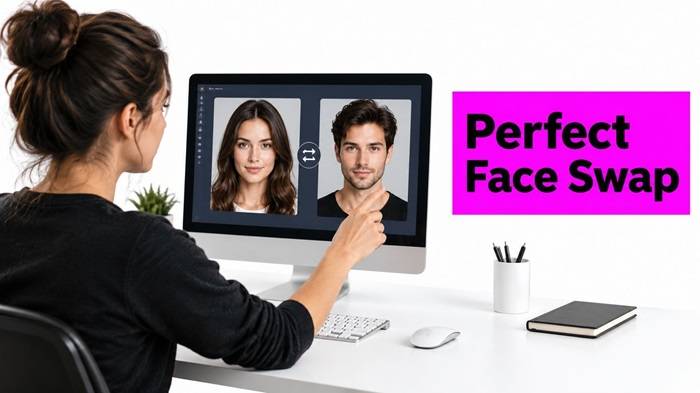
A few years ago, swapping one person’s face onto another’s body in a video was a job for visual effects studios with powerful hardware and patient artists. Today you can do a basic version on a laptop in the time it takes to make coffee. That shift has opened the door to playful social content, but it has also raised serious questions about quality, consent, and trust.
If you are a content creator, marketer, educator, or small studio owner, the real question is not whether the technology exists. It is whether it is dependable enough to use on real projects with real deadlines, and responsible enough to put your name on. The answer depends on what you are making and how carefully you handle the process.
This guide looks at where face swap performs well, where it still struggles, and how to set up a workflow that protects the people involved. By the end, you should be able to judge whether it belongs in your next project.
What Face Swap Actually Does
At its core, the process detects a face in a source image or video, maps its key features, and blends them onto a target face while preserving the target’s pose, lighting, and expression. Modern systems handle head turns, changing light, and moving cameras far better than early versions, which often produced visible seams or flickering edges.
For creators, the practical appeal is simple. A face swap tool can place an actor’s likeness into alternate takes, localize a character for different audiences, or let a presenter appear in scenes that were never filmed. The key is to treat it as a production aid with clear limits instead of a trick that fixes weak footage.
Where results tend to look best
Quality rises when the source and target share similar angles, lighting direction, and image resolution. Clear, front-facing photos with even light give the model more to work with than small, shadowed shots. Footage with steady framing and few fast movements also holds up better than chaotic handheld clips.
Where it still struggles
Extreme side angles, heavy occlusion from hands or hair, strong motion blur, and unusual lighting can all cause artifacts. Glasses, facial hair, and rapid expressions add further difficulty. Knowing these limits helps you plan shots that play to the strengths of the technology rather than fighting against them.
Creative Uses That Make Practical Sense
Entertainment is the obvious category, but several quieter uses deliver more lasting value. Short-form creators use swaps for parody and character-driven sketches. Marketing teams adapt a single shoot to several regional campaigns. Trainers create scenario videos where a consistent presenter appears across many modules without scheduling new filming days.
Independent filmmakers also find it useful for fixing small continuity issues or testing casting ideas in early drafts. In each case, the person whose likeness is used has agreed to it, and the result is labeled or understood by the audience. That combination of permission and clarity separates responsible work from the kind that damages trust.
Campaign adaptation
Imagine a single product demo that needs to feel local in several markets. Instead of reshooting everything, a team can work with consenting talent from each region and adapt the footage accordingly. This reduces cost and timeline pressure, though it still calls for careful review so that cultural details, wardrobe, and settings remain appropriate.
Education and training
Instructional teams can maintain a consistent on-screen guide across a course while updating content over time. When a script changes, they avoid recalling the presenter for another session. Learners benefit from a familiar face, and the organization saves time on routine updates.
Consent and Ethics Come First
No amount of visual polish makes up for using someone’s face without permission. Before you begin, get written agreement from every person whose likeness will appear, and explain how the footage will be used, where it will be published, and for how long. Keep the record somewhere your team can find it.
Avoid any use that could mislead viewers about what a real person said or did. That includes political content, news-style material, and anything involving private individuals. Responsible platforms discourage misuse, and many regions are introducing rules about synthetic media. Staying well inside those boundaries protects both your audience and your reputation.
A simple responsible-use checklist
- Written consent from every person shown
- A clear label or caption where synthetic content may confuse viewers
- No use in deceptive, harassing, or defamatory contexts
- Secure storage and deletion of source images once a project ends
A Workflow That Produces Cleaner Results
Start with the best source material you can get. Use high-resolution images or footage with even lighting and a clear view of the face. If you can choose, match the angle and expression of the source to the target scene. This single step prevents many of the artifacts that people blame on the software.
Next, run a short test before processing a full video. Pick a ten-second section that includes the hardest moments, such as a head turn or a change in lighting. If the result holds up there, the rest will likely be fine. If not, adjust the source or consider reframing the shot. Platforms like AKOOL offer tools that fit this test-first approach, which helps you catch issues before spending time on a long render.
Polish in the edit
Even strong output benefits from a finishing pass. Color-match the swapped face to the surrounding skin tones, check the edges around hairlines and jaw, and review the clip frame by frame at the most active moments. Small corrections here are the difference between a clip that feels natural and one that raises questions.
Review with fresh eyes
After working on a clip for a while, you stop noticing flaws. Ask a colleague to watch it without any context and tell you if anything feels odd. Their first reaction is often the same as your audience’s, and it is far easier to address early than after publishing.
Ready, With the Right Guardrails
Face swap has matured enough for practical creative work, provided you choose suitable projects and handle them with care. It performs well with clean source material, gentle camera movement, and clear permission from everyone involved. It still needs human review, thoughtful editing, and honest labeling where context could confuse viewers.
If you are curious, begin with a small, low-risk project. Use your own image or that of a collaborator who has agreed, test a short section, and learn how the results behave. That hands-on experience will tell you more than any article can, and it will help you decide where the technology fits into your regular creative routine.