


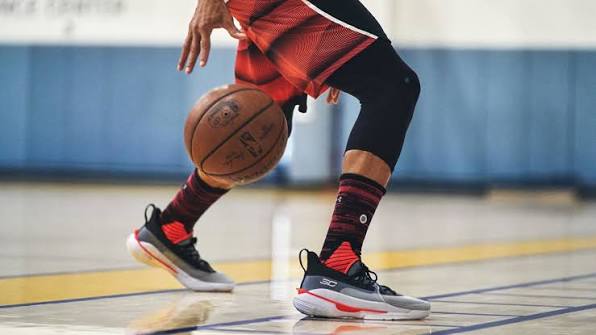
Your opponent makes one crossover and you’re already a step behind. Not because you’re slow. Because your feet weren’t ready. Defensive footwork is the one skill most players practice least and feel most during a game. The good news: it is trainable. A few focused drills done consistently will close that gap faster than any athletic supplement or highlight-reel tip ever will.
The right basketball shoes and the right footwork habits work together. This article gives you both: the drills that build real lateral speed, and what to look for in the footwear that supports them.
Why Lateral Quickness Matters More Than Raw Speed
Straight-line speed helps in transition. Lateral quickness wins you defensive matchups. Most possessions in basketball require short, sharp side-to-side movements, not 40-yard dashes. A guard who can stay in front of a ball-handler on the perimeter is more valuable than one who is simply fast.
Lateral movement starts with stance and foot placement. If your base is too narrow or your weight is on your heels, no amount of effort recovers the step you just gave away.
4 Defensive Footwork Drills That Actually Work
- Defensive Slide Drill :
Set two cones 10-12 feet apart. Stay low, push off your outside foot, and slide side to side without letting your feet touch. Keep your hips below your shoulders the whole time. Do 3 sets of 30 seconds. This is the base drill. Everything else builds on it.
- 5-10-5 Shuffle :
Place three cones in a line, five yards apart. Start at the middle cone, shuffle to the right, touch the cone, shuffle left past the middle to the far cone, then back to the start. This drill trains change of direction, which is the moment most defenders lose their man.
- Closeout Drill :
Stand under the basket, sprint out to the three-point line, and brake hard into a low defensive stance. Land on two feet with your weight forward. This trains the stop, which is just as important as the slide.
- T-Drill :
Set cones in a T shape: one at the base, one 10 yards ahead, and one five yards to each side of the top cone. Sprint forward, shuffle left, shuffle right, shuffle back to center, and backpedal to start. The T-drill combines every defensive movement in one sequence.
The Stance That Makes Every Drill More Effective
Every defensive drill above fails if your starting stance is wrong. Feet shoulder-width apart, knees bent, back flat, weight on the balls of your feet. This is the defensive ready position, and it is non-negotiable.
Players who skip stance work spend energy fighting their own body position during drills. Get the stance right first and the drills become twice as effective at half the effort
How Your Basketball Shoes Affect Your Footwork
Your shoes are not a minor detail. The court grip, lateral support, and sole cushioning in your basketball shoes directly affect how well you execute every drill above. A shoe with poor lateral support lets your foot roll during sharp cuts. A sole that is too thick slows your ground feel and makes quick pivots harder.
Look for low-to-mid cut basketball shoes with a wide, grippy outsole and firm midsole cushioning. These give you the stability for defensive slides without adding bulk that slows your feet.
How Often to Train Defensive Footwork
Three sessions a week is enough to see improvement in four to six weeks. Add footwork drills at the start of practice, before fatigue sets in. Tired feet develop sloppy habits, and sloppy habits stick.
Track your 5-10-5 time every two weeks. A 0.2-second drop in four weeks means the training is working. If the number is not moving, check your stance first and your effort second.
Start Moving Faster on Defense Today
Lateral quickness is a skill, not a gift. The players who guard the fastest opponents in their league are almost always the players who put in low-profile, unglamorous footwork work before practice starts.
Pick one drill from this list and do it three times this week. You will feel the difference in your first live defensive rep. Once your footwork is dialed in, make sure your shoes can keep up.