


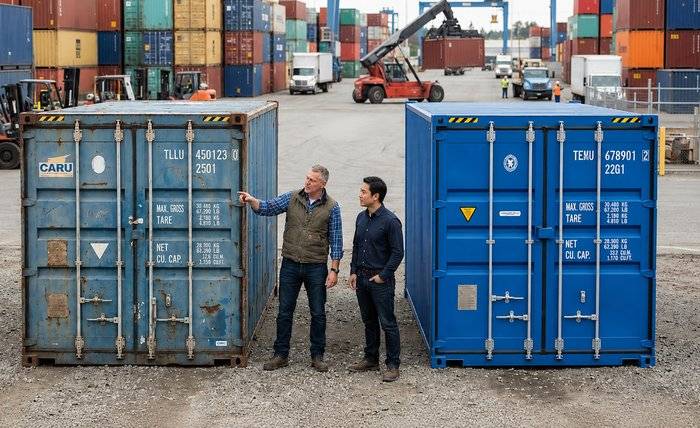
How to compare new, used, one-trip, cargo-worthy, and wind-and-watertight containers so the purchase matches the intended business use.
Buying a shipping container can look straightforward until the condition terms start to blur together. New, used, one-trip, cargo-worthy, and wind-and-watertight containers can all be useful, but they are not interchangeable. For business owners and operations teams, understanding container grades helps prevent overpaying, underbuying, or choosing a unit that does not fit the job. The right container depends on how it will be used, where it will be placed, how long it needs to last, and whether it must be suitable for transport or static storage.
A new container is often described as a one-trip container because it has typically made one loaded trip from the manufacturer before being sold. These units usually have less visible wear than older used containers, making them attractive for businesses that want a cleaner appearance, longer expected service life, or easier modification. However, a one-trip container is not always necessary. If the unit will sit behind a warehouse, on a construction site, or in an industrial yard, appearance may matter less than structure, door function, and overall durability.
For business owners and operations teams, understanding container grades helps prevent overpaying, underbuying, or choosing a unit that does not fit the job. The right container depends on how it will be used, where it will be placed, how long it needs to last, and whether it must be suitable for transport or static storage.
New and One-Trip Containers Are Not Always the Same Decision
A new container is often described as a one-trip container because it has typically made one loaded trip from the manufacturer before being sold. These units usually have less visible wear than older used containers, making them attractive for businesses that want a cleaner appearance, longer expected service life, or easier modification.
That said, a one-trip container is not always necessary. If the unit will sit behind a warehouse, on a construction site, or in an industrial yard, appearance may matter less than structure, door function, weather resistance, and price. Paying for a newer unit can make sense when presentation, longevity, or modifications are priorities. It may be unnecessary when the goal is basic equipment storage.
The practical question is simple: does the business need a cleaner asset, or does it need a functional storage unit? Answering that question early helps narrow the search before comparing quotes.
Used Containers Can Be Practical When Condition Is Clear
Used containers are common for business storage because they can offer strong utility at a lower cost than newer units. However, “used” is a broad term. A used container may be in good condition, or it may have dents, surface rust, wornfloors, older seals, stiff doors, patches, or cosmetic damage.
Before buying, operations teams should request recent photos and ask specific questions. Are the doors easy to open and close? Are the door gaskets intact? Are there visible holes, roof dents, or floor soft spots? Is the container wind and watertight? Has it been repaired?
For companies comparing
A used container can be a smart choice when the buyer understands what condition is acceptable for the use case. It becomes risky when the purchase is based only on price.
Wind-and-Watertight Containers Are Often Built for Storage Needs
Wind-and-watertight is one of the most important terms for storage buyers. It generally means the container is intended to keep out wind and rain when the doors are closed and the structure is intact. For many businesses, this grade is suitable for tools, equipment, boxed inventory, seasonal materials, and general on-site storage.
However, wind-and-watertight does not automatically mean cargo-worthy. A container can be suitable for storage but not approved for international transport. This distinction matters. A company using a container as a static storage unit may not need export suitability. A company planning to ship cargo may need a container that meets transport standards.
Buyers should still inspect carefully. The roof, corners, door seals, floor, locking bars, and underside can affect long-term performance. A container that looks acceptable from one angle may still have drainage or sealing issues that matter once it is placed outdoors.
Cargo-Worthy Containers Are for Transport-Related Use Cases
Cargo-worthy containers are generally used when a container must be suitable for shipping or transport. This grade is more relevant for logistics, export, intermodal movement, or situations where the container may need documentation confirming its condition.
The International Maritime Organization explains that the 1972 Convention for Safe Containers sets procedures for containers used in international transport to be approved for safety and fitted with a safety approval plate. Transport Canada has also stated that container owners are to ensure containers are approved, carry a valid Safety Approval Plate, and are maintained in safe condition when used in that context.
For buyers, the takeaway is that cargo-worthy condition should be matched to an actual transport need. If the container will only store materials on private property, cargo-worthy condition may exceed the requirement. If it will move through transport channels, the buyer should confirm the required certification, inspection status, and documentation before purchase.
Condition Terms Should Be Matched to Site Planning
Container grade is only part of the buying decision. Even a suitable container can create problems if the site is not ready. Delivery access, level ground, drainage, clearance, and placement rules all affect whether the container works as intended.
A wind-and-watertight container placed on soft, uneven ground may become harder to open over time. A used container placed where water pools may deteriorate faster. A clean one-trip unit placed on a poorly prepared site may still become inconvenient to use.
Businesses should confirm truck access, turning radius, overhead clearance, ground stability, and final orientation before delivery. Placement should also support workplace access. If employees will enter the container regularly, the surrounding area should be safe, visible, and easy to reach.
Permits and Local Rules Can Affect Placement
Some buyers focus on the container and overlook local rules. That can create delays after the purchase is made. Municipal requirements may vary depending on location, zoning, size, duration, use, and whether the container is modified.
For example, the City of Hamilton states that shipping containers used on land are recognized as structures under the Ontario Building Code, and that structures over 10 square metres may require a building permit. The City of Ottawa also notes that modifications to shipping containers may need to be designed under applicable Ontario Building Code requirements.
Before buying, businesses should check zoning, permit requirements, setbacks, fire access, and site-specific approval processes. This is especially important for commercial, industrial, agricultural, construction, and multi-tenant properties.
Container grades matter because they affect cost, suitability, delivery planning, and long-term usefulness. A one-trip container may be ideal when appearance and lifespan matter. A used wind-and-watertight container may be enough for static storage. A cargo-worthy unit may be necessary when transport requirements apply.
The practical approach is to define the use first, compare condition terms carefully, inspect the right features, and confirm site requirements before purchase.
Additional Resources
For buyers comparing container availability and purchasing considerations nationally, this shipping containers canada resource offers more context on sizes, conditions, and purchase planning.